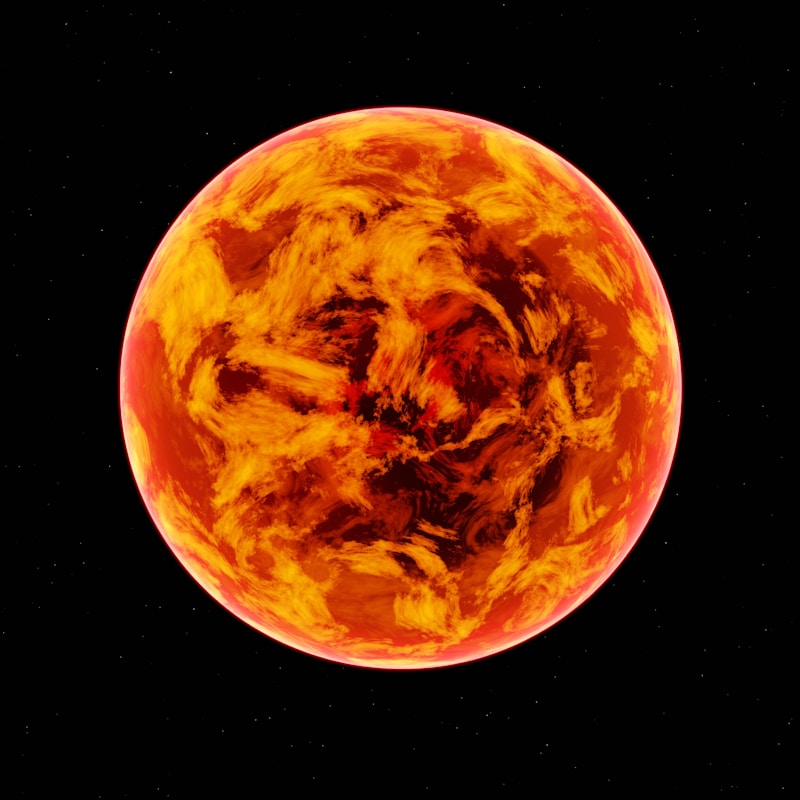
Our Sun is classified as a G-type main-sequence star, commonly known as a yellow dwarf. Despite its name, it actually emits white light — it only appears yellow due to Earth's atmospheric scattering. It has been burning for about 4.6 billion years.
Question 2 / 10
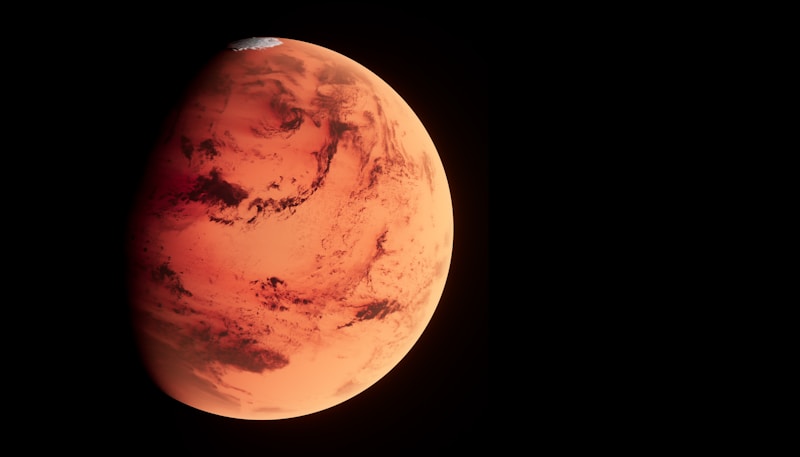
Which planet is known as the "Red Planet"?
1
Venus
2
Mercury
3
Mars
4
Saturn
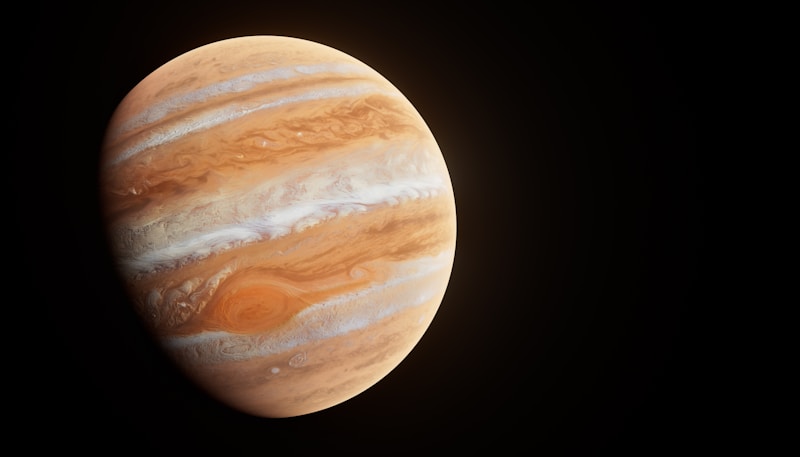
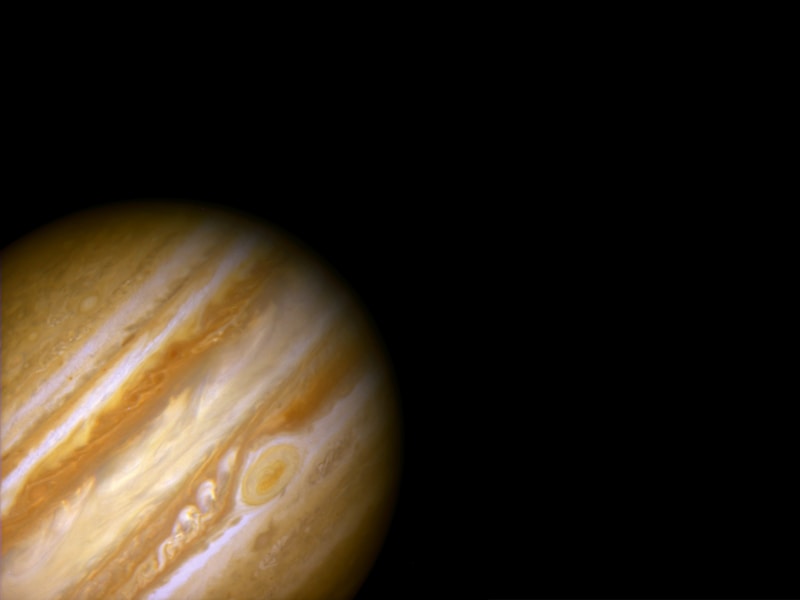
Jupiter is the largest planet in our solar system, with a mass more than twice that of all other planets combined. Its Great Red Spot is a storm that has been raging for at least 350 years and is large enough to swallow Earth whole.
Question 3 / 10
What is the hottest planet in our solar system?
1
Venus
2
Mercury
3
Mars
4
Sun
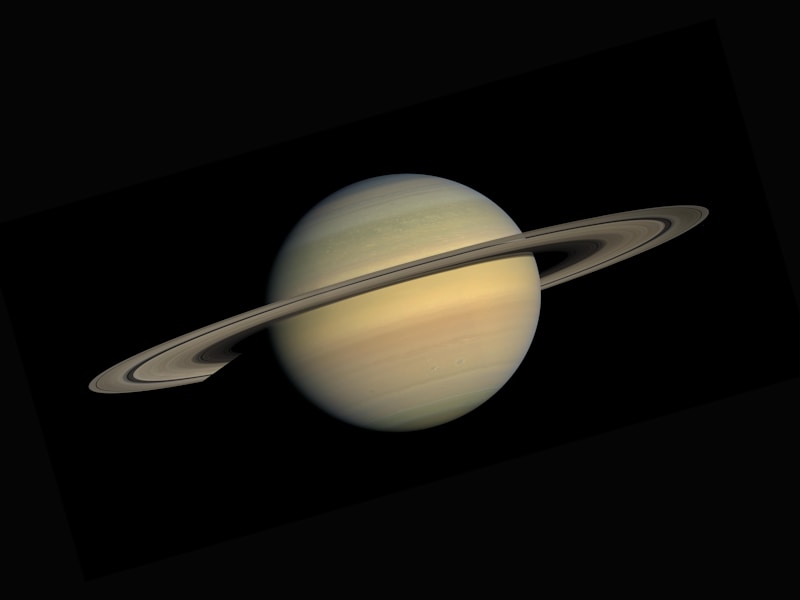
Saturn's rings are made primarily of ice particles, rocky debris, and dust. While they extend up to 282,000 km from the planet's center, they are remarkably thin — averaging only about 10 meters in thickness.
Question 4 / 10
Which planet is famous for its extensive ring system?
1
Jupiter
2
Saturn
3
Uranus
4
Neptune
Mercury is the closest planet to the Sun, orbiting at an average distance of just 36 million miles. Despite this proximity, it is not the hottest planet — that title goes to Venus, whose thick atmosphere traps heat through a runaway greenhouse effect.
Question 5 / 10
What type of star is the Sun?
1
Red Giant
2
White Dwarf
3
Blue Supergiant
4
Yellow Dwarf
Mars is known as the Red Planet because its surface is rich in iron oxide (rust), which gives it a distinctive reddish appearance. NASA's Perseverance rover is currently exploring Jezero Crater, searching for signs of ancient microbial life.
Question 6 / 10
Which galaxy is the closest spiral galaxy to the Milky Way?
1
Andromeda
2
Sombrero
3
Triangulum
4
Centaurus A
Neptune has the strongest sustained winds of any planet in the solar system, with speeds reaching up to 1,200 mph. Its deep blue color comes from methane in its atmosphere, which absorbs red light and reflects blue wavelengths back into space.
Question 7 / 10
What was the first human-made satellite launched into space?
1
Explorer 1
2
Sputnik 1
3
Vostok 1
4
Telstar
The Andromeda Galaxy is the nearest large galaxy to the Milky Way, located about 2.5 million light-years away. It is on a collision course with our galaxy and is expected to merge with the Milky Way in approximately 4.5 billion years.
Question 8 / 10
Which planet has a "Great Red Spot"?
1
Jupiter
2
Mars
3
Venus
4
Saturn
Venus rotates on its axis in the opposite direction to most planets — a phenomenon called retrograde rotation. This means the Sun rises in the west and sets in the east on Venus. A single Venusian day is longer than its year.
Question 9 / 10
What is the region around a black hole from which light cannot escape?
1
Singularity
2
Accretion Disk
3
Event Horizon
4
Photon Sphere
Pluto was reclassified as a dwarf planet by the International Astronomical Union in 2006 because it has not 'cleared the neighborhood' around its orbit. NASA's New Horizons mission revealed it has mountains made of water ice and a thin atmosphere.
Stars form in nebulae; black holes warp spacetime; exoplanet surveys suggest billions of worlds in our galaxy. The James Webb Space Telescope extended infrared astronomy to early galaxy formation.