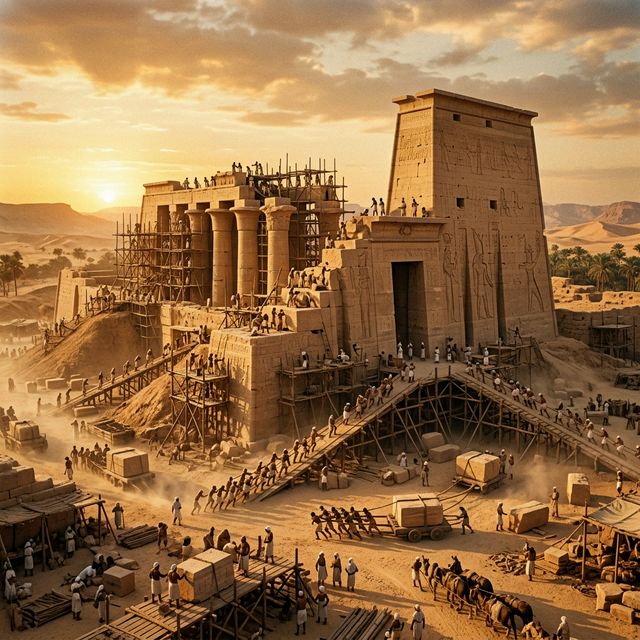
Cleopatra VII ruled Egypt from 51 BC until her death in 30 BC, making her closer in time to the Moon landing than to the construction of the Great Pyramid of Giza. She was the last active ruler of the Ptolemaic Kingdom.
Question 2 / 10
In what year did the French Revolution begin?
1
1776
2
1789
3
1812
4
1848
The Berlin Wall fell on November 9, 1989, after 28 years of dividing East and West Berlin. The event was triggered partly by a miscommunicated press conference that led thousands of East Berliners to rush the border crossings.
Question 3 / 10
Which empire was ruled by Mansa Musa, often cited as the wealthiest person in history?
1
Ottoman Empire
2
Aztec Empire
3
Mali Empire
4
Mongol Empire
The Magna Carta, signed in 1215 by King John of England, established the principle that everyone, including the king, was subject to the law. It became the foundation for constitutional law in many democracies around the world.
Question 4 / 10
Who was the primary author of the United States Declaration of Independence?
1
George Washington
2
Thomas Jefferson
3
Benjamin Franklin
4
John Adams
The Silk Road was an ancient network of trade routes connecting China to the Mediterranean, spanning over 4,000 miles. It facilitated not just the trade of silk and spices, but also the exchange of ideas, religions, and technologies between civilizations.
Question 5 / 10
Which explorer led the first expedition to circumnavigate the globe?
1
Ferdinand Magellan
2
Christopher Columbus
3
Vasco da Gama
4
Captain James Cook
The French Revolution began in 1789 with the storming of the Bastille prison, a symbol of royal tyranny. The revolution fundamentally transformed French society, abolishing feudalism and establishing the principles of liberty, equality, and fraternity.
Question 6 / 10
Which explorer is credited with discovering the Americas in 1492?
1
Christopher Columbus
2
Vasco da Gama
3
Marco Polo
4
Ferdinand Magellan
The Renaissance, meaning 'rebirth,' began in 14th-century Italy and spread across Europe. It was a cultural movement that produced masterpieces by Leonardo da Vinci, Michelangelo, and Raphael, and marked the transition from the medieval to the modern age.
Question 7 / 10
Who was the first woman to win a Nobel Prize?
1
Marie Curie
2
Mother Teresa
3
Eleanor Roosevelt
4
Amelia Earhart
The Roman Empire at its peak around 117 AD stretched from Britain to Mesopotamia, encompassing over 5 million square kilometers. Its legacy includes roads, aqueducts, legal systems, and languages that form the foundation of Western civilization.
Question 8 / 10
What was the name of the ship that brought the Pilgrims to America in 1620?
1
Mayflower
2
Santa Maria
3
Beagle
4
Endeavour
The Industrial Revolution began in Britain in the late 18th century and fundamentally changed how goods were produced. The invention of the steam engine by James Watt in 1769 powered factories, trains, and ships, transforming the global economy.
Question 9 / 10
Who led the Mongol Empire to become the largest contiguous land empire in history?
1
Kublai Khan
2
Attila the Hun
3
Tamerlane
4
Genghis Khan
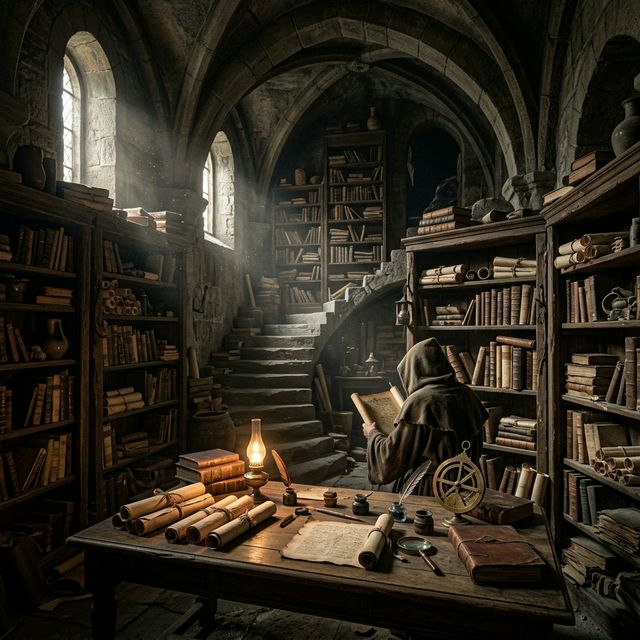
The ancient Library of Alexandria in Egypt was one of the largest and most significant libraries of the ancient world. Founded in the 3rd century BC, it aimed to collect all the world's knowledge and may have held over 400,000 scrolls at its peak.
Question 10 / 10
The 'Magna Carta' was famously signed in 1215 in which country?
1
England
2
France
3
Italy
4
Germany
Advertisement
Your Results
You scored 0 out of 10
🏛️ History Buff!
You know the past like it was yesterday!
🛡️ Noble Scholar!
Great score! You have a solid grasp of history.
📜 Time Traveler!
You know the basics, but some eras are blurry.
🕯️ Student of the Past!
Time to hit the history books again.
🕰️ Try Again!
History repeats itself - give it another shot!
Learn more: World History Challenge
History quizzes become more meaningful when tied to primary sources. The National Archives digitizes treaties, maps, and correspondence that clarify cause and effect across centuries.
From the fall of Rome to the Cold War, timelines help you connect political change with technology and trade. Pair this quiz with our article Hidden History Facts for lesser-known stories.